

The History of Red Envelopes (Ang Pow)
How you can use them during the year of the Yin Fire Goat in 2027
© Written and updated by Jessica Hanna 2026

The Tradition of the Red Envelope – Ang Pow

A red envelope, traditionally known as an Ang Pow, is one of the most cherished traditions associated with Chinese New Year. These beautifully decorated envelopes bring excitement, anticipation, and gratitude, and are traditionally given to children and unmarried younger family members, though they are also exchanged at weddings, birthdays, and other special celebrations throughout China and many other Asian countries.
The tradition involves placing money inside a decorative red envelope, usually given by parents, grandparents, relatives or close family friends. For children in particular, receiving an Ang Pow is often one of the most eagerly anticipated parts of Chinese New Year!
Traditionally decorated in vibrant shades of red and gold, these envelopes represent happiness, good fortune, wealth and prosperity. Red is considered an especially auspicious colour in Chinese culture and is believed to ward off negative energies and protect against evil spirits. Consequently, an Ang Pow represents much more than a simple monetary gift; it is a way of sharing blessings and wishing someone well for the year ahead.
Our little boy, Lochie, has always been lucky enough to receive an Ang Pow, although until recently he was a little too young to fully appreciate the tradition. With his fourth birthday approaching, he is now beginning to understand the concept of money and, more importantly, the excitement of having some of his own!
Just the other day, he emptied his moneybox into his pocket and proudly announced he was going to spend it on something special. It made me smile, and I cannot wait to see his face light up when a special red envelope finds its way into his hands this Chinese New Year. Sometimes, the simplest traditions create the most wonderful memories.
The History of the Ang Pow Red Envelope
Several stories surround the origins of the traditional red envelope, with some accounts tracing the custom back hundreds of years to ancient China.
One popular legend tells of a terrifying demon that was terrorising a village during the Song Dynasty (960–1279). Despite the efforts of numerous warriors and influential leaders, nobody seemed capable of defeating it. Eventually, a young orphan stepped forward, armed with a magical sword inherited from his ancestors. After a fierce battle, he killed the demon and restored peace to the village. In gratitude for his bravery, the village elders presented him with a red pouch filled with money as a reward.
Another traditional account relates to the custom of giving Yā Suì Qián (压岁钱), commonly translated as ‘money to ward off age’ or ‘lucky money’. Coins were traditionally threaded onto red string and given to children, with the belief that they would protect them from evil spirits, illness and misfortune, helping to ensure a long and healthy life. Over time, as paper production and printing became more widespread, the practice evolved, with money increasingly being placed inside decorative red envelopes instead.
One traditional Chinese New Year greeting you might hear when adults visit a household with children is:
“Gōng Xǐ Fā Cái, Hóng Bāo Ná Lái!”
This translates loosely as ‘Wishing you prosperity and good fortune in the New Year – now, where is my red envelope?’ It might sound a little cheeky, but asking for an Ang Pow is a familiar and playful part of the celebrations!
What Are Red Envelopes Called?
Red envelopes go by several names across Asia, depending on the language and region. These include:
- Ang Pow – commonly used in Singapore and Malaysia
- Hong Bao – Mandarin Chinese
- Red Envelope
- Red Packet
- Lai See – Cantonese
- Laisee
Different Designs and Symbolism on an Ang Pow
 The designs found on traditional Ang Pows are rarely chosen simply for decoration. Many incorporate meaningful Chinese symbols and auspicious imagery, each carrying its own wishes and blessings for the recipient. These designs often express hopes for long life, happiness, success, prosperity, good health and good fortune.
Artists incorporate a wonderful variety of traditional Chinese imagery into their designs. You might see carp swimming amongst flowering lilies, symbolising abundance and prosperity, or a Dragon and Phoenix intertwined, representing harmony, auspicious relationships and good fortune. It is also common to find red envelopes featuring the Chinese zodiac animal of the coming year.
For 2027, the Year of the Yin Fire Goat, you may come across particularly beautiful designs featuring the Goat, alongside traditional symbols of abundance, happiness and prosperity.
Other familiar images include peonies displayed in full bloom, golden pineapples, Buddha figures, children dressed in traditional Chinese clothing and the Three Immortals. Each design carries its own symbolism, making an Ang Pow a thoughtful gift that conveys far more than its monetary value.
Over the years, we have been fortunate enough to give and receive some genuinely stunning red envelopes from family, friends and clients. The artwork and attention to detail can be quite extraordinary, and it is always lovely to discover the different symbols and meanings incorporated into each design.
Red envelopes are traditionally rectangular, with their sizes varying considerably. Smaller envelopes are ideal for holding folded banknotes, while larger designs can accommodate unfolded notes and are often used for more substantial gifts, such as wedding contributions.
As a company that takes great pride in quality and presentation, we carefully select every red envelope design we offer. We also love sharing a little of this tradition with our customers. With every order, we include two complimentary red envelopes, each containing a Chinese I-Ching coin, as a small gift to wish you luck, happiness, and prosperity.
For 2027, we have once again incorporated the beautiful tradition of the red envelope into our annual wish and romance enhancer.
For the Year of the Yin Fire Goat, it is a lovely way to focus your intentions on strengthening relationships, attracting love and encouraging greater harmony and happiness in your life.
How Much Money Should You Place Inside an Ang Pow?
The amount of money you place inside an Ang Pow should reflect both your financial circumstances and your relationship with the recipient. Traditionally, brand-new banknotes are preferred, as they symbolise fresh beginnings, good fortune and prosperity for the year ahead.
When giving red envelopes to children during Chinese New Year, their age often plays a part in deciding how much to give. As they grow older, they can look forward to receiving a little more each year. For example, a five-year-old might receive £6 (approximately US$8), followed by £8 (approximately US$10) the following year.
Whatever amount you choose, even numbers are generally considered more auspicious, as they are associated with happiness and good fortune.
Ang Pows are not just for children, either. You can use them to present money as a gift for many different occasions. I have quite a few clients who like to pay for their Feng Shui consultation by placing their money or cheque inside a beautifully decorated red envelope. It is always a lovely surprise and a thoughtful way to present payment, although it is certainly not expected!
During Chinese New Year celebrations, you may also see red envelopes being offered to the Chinese Lion during a traditional Lion Dance. The envelopes are placed inside the Lion’s mouth, symbolising an offering of good fortune and prosperity. It is believed that generous givers will attract good luck in return. It is also a lovely way to reward the performers, as Lion Dancing is an incredibly energetic and physically demanding performance!
Popular amounts to give include £2, £6, £8, £10 and £20, with numbers containing an eight being particularly favourable. Traditionally, you should avoid amounts containing the number four, such as £4, £14, £40 or £46, as four is associated with death in Chinese culture because of the similarity in pronunciation.
Interestingly, although money is traditionally placed inside an Ang Pow, receiving a single Chinese I-Ching coin inside a red envelope is also considered a fortunate gift. This is one reason we love including these little gifts with our customer orders. It is a lovely way to share the tradition and send our customers a little extra luck and prosperity for the year ahead.
Another popular tradition is for employers to give red envelopes containing money to their employees before Chinese New Year. These gifts are often presented as a bonus or gesture of appreciation, with the belief that sharing wealth and good fortune will help attract continued prosperity and success for the business in the coming year.
You may come across differing opinions about whether coins should be placed inside an Ang Pow. Some people prefer to give only banknotes, although this seems more like a personal preference than a strict traditional rule. Personally, I see nothing wrong with including coins, particularly when they carry their own auspicious symbolism.
The Significance of Numbers When Giving an Ang Pow
Chinese culture places considerable importance on numbers, particularly because of homophones – words that sound alike but have different meanings. This is why certain numbers are considered especially lucky when giving money inside a red envelope.
Some of the most popular numbers include:
- Number 8: Considered extremely auspicious because its pronunciation is associated with prosperity, wealth and good fortune.
- Number 9: Associated with longevity, lasting happiness and long-lasting relationships.
- Number 6: Often associated with smooth progress and things going favourably.
- Number 4: Generally avoided because its pronunciation is similar to the Chinese word for death.
Choosing an auspicious amount is a lovely way to add another layer of meaning to your Ang Pow. Ultimately, however, the most important part of the tradition is the thought behind the gift and the wish for happiness, good health and prosperity for the person receiving it.
For more information about the meaning of numbers and their significance in Feng Shui, see our article on Feng Shui Numerology.
Giving and receiving red envelopes (Ang Pow)
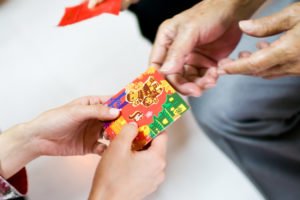
Giving and receiving an Ang Pow is a lovely tradition that carries far more meaning than simply exchanging money. When someone gives you a red envelope, it should be received as a gesture of goodwill, generosity and genuine wishes for your happiness, health and prosperity.
When receiving an Ang Pow, it is customary to accept it with both hands as a sign of respect and appreciation. Avoid opening the envelope in front of the person who gave it to you; save it for when you are in private. A sincere thank you, accompanied by a few traditional Chinese New Year greetings, is always appreciated.
If you are giving an Ang Pow, take a little time to choose an envelope with a design that appeals to you and carries an auspicious meaning. Red and gold are particularly popular colours, symbolising happiness, wealth and prosperity. It is also worth choosing good-quality envelopes, as presentation is an important part of the tradition.
We stock a beautiful selection of red envelopes, carefully chosen for their designs and symbolism, which you can purchase using the link below:


Red envelopes X10
Price: £4.99 (GBP)Red envelopes play a crucial every day role in many transcendental cures. also known as "red packets" "Ang Pow" "laisee" or "Hung-Bao". These are superb quality and a lovely gift for weddings, New Year, birthdays etc.They are seen as extremely auspicious when given as a gift and are even more auspicious when they contain money.The main use of red ...
Receiving an Ang Pow
- Accept the envelope with both hands to show respect and appreciation.
- Avoid opening it in public or in front of the person who gave it to you. Open it privately instead.
- Thank the giver and acknowledge their generosity.
- Return their good wishes during Chinese New Year with a traditional greeting such as Gōng Xǐ Fā Cái, wishing them prosperity and good fortune.
Giving an Ang Pow
- Choose a meaningful design that carries an auspicious message or symbolism.
- Choose traditional colours, such as red, gold or orange, which are associated with good fortune and prosperity.
- Avoid white envelopes, as white is traditionally associated with funerals and mourning.
- Choose an auspicious amount, preferably an even number, and avoid amounts containing the number four.
- Present the envelope with both hands as a gesture of respect and goodwill.
- Use clean, preferably brand-new banknotes, as these symbolise fresh beginnings and good fortune for the year ahead.
Above all, remember that an Ang Pow is about sharing happiness and good fortune. The amount of money inside matters far less than the thought, kindness, and positive intentions behind the gift.
When Do You Give Ang Pows?
Giving and receiving Ang Pows is a centuries-old tradition that continues to grow in popularity around the world. Although red envelopes are most strongly associated with Chinese New Year, they are also given on many other special occasions, including birthdays, weddings and important family celebrations.
The most popular time to exchange Ang Pows is during Chinese New Year, when married adults traditionally give red envelopes containing money to children and younger unmarried family members. It is a lovely way to share blessings, pass on good fortune, and wish others happiness and prosperity for the year ahead.
For 2027, Chinese New Year falls on 6th February, although the date changes each year according to the traditional Chinese lunisolar calendar.
Upcoming Chinese New Year dates:
- 2027: 6th February
- 2028: 26th January
- 2029: 13th February
- 2030: 3rd February
- 2031: 23rd January
Birthdays

In many Asian cultures, red envelopes are also given to celebrate birthdays and important milestones. One particularly lovely tradition is to give new parents an Ang Pow when their baby reaches its first month of
life. This is an important family celebration, often known as a baby’s full-month celebration.
In some communities, particularly in parts of Malaysia and Singapore, the parents may reciprocate by distributing traditional gifts to family members and friends. These can include red-dyed eggs, yellow turmeric rice (nasi kunyit) served with curry chicken, and traditional bean cakes known as Ang Ku Kueh.
In many Asian communities, it is also customary to give money in a red envelope as a birthday present, regardless of the recipient’s age. Even older generations may receive Ang Pows from younger family members when celebrating significant milestone birthdays, such as their 70th. The envelope represents much more than a monetary gift; it carries wishes for long life, happiness, good health and continued prosperity.
Weddings
Ang Pows are particularly popular at weddings, where guests traditionally present the newlyweds with a red envelope containing money instead of, or alongside, a physical wedding gift. These contributions can also help towards the cost of hosting the wedding celebration.
Customs surrounding wedding Ang Pows can differ considerably between regions and families. In some traditions, unmarried guests and younger family members give red envelopes to the newlyweds, while in others, older relatives give Ang Pows to younger family members as a blessing for their future.
As with many Chinese traditions, precise etiquette varies by area, family customs, and cultural background.
School Activities
Many schools and nurseries now celebrate Chinese New Year, giving children a wonderful opportunity to discover different cultures and learn about the traditions and symbolism surrounding this special time of year.
Each year, we are delighted to support Lochie’s nursery by providing a selection of Ang Pows for the children to take home and share with their families. It is a lovely way to introduce the tradition of red envelopes and encourage children to learn a little more about Chinese New Year.
I am always amazed by the creativity of the nursery staff, who seem to make their themed activities even more imaginative each year! From decorating Chinese lanterns and hanging them around the nursery to creating wooden snakes for the Year of the Snake, they put so much thought into making the celebrations fun, colourful and educational.
I am particularly excited to see what wonderful crafts and activities they come up with for the 2027 Year of the Yin Fire Goat. I have a feeling there will be some very cute little goats appearing around the nursery!
If you are ordering Ang Pows for a school, nursery or educational centre, please feel free to email us. We would be delighted to help arrange a bulk order of red envelopes so that you can share this lovely tradition with the children.

Chinese New Year 2027 – The Year of the Yin Fire Goat
According to the Lunar calendar, Chinese New Year begins on 6th February 2027, welcoming the Year of the Yin Fire Goat.
Chinese New Year represents new beginnings, fresh opportunities and the chance to embrace the year ahead. Celebrated around the world, it is a time for family reunions, forgiveness, sharing and thanksgiving, with festivities including red envelopes (Ang Pows), fireworks, Dragon and Lion dances.
However, there is another important date to remember if you follow Feng Shui.
The Solar New Year (Li Chun) falls on 4th February 2027, marking the beginning of the new solar year. This is the date we follow for annual Flying Star Feng Shui, when the annual energies change and your 2027 cures and enhancers should be put in place.
The Difference Between the Lunar and Solar New Year
The Lunar calendar follows the Moon’s cycles, with each month lasting about 29.5 days. An additional month is inserted periodically to keep the calendar aligned with the seasons. This is why Lunar Chinese New Year falls on a different date each year, usually between late January and mid-February.
The Solar calendar, also known as the Hsia calendar, follows the Earth’s relationship with the Sun and the changing seasons. Its beginning of Spring, known as Li Chun, generally falls on 3rd or 4th February.
Which Date Should You Follow for Annual Flying Star Feng Shui?
Although Lunar Chinese New Year on 6th February is the main date for celebrations, Flying Star Feng Shui follows the Solar New Year on 4th February 2027.
This is when the annual Flying Star energies change, so you should have your annual cures and enhancers in place by this date rather than waiting for the Lunar New Year celebrations.
In simple terms, celebrate Chinese New Year on 6th February, but prepare your home and office for the new Feng Shui energies by 4th February!
Common names for Red Envelopes
In China, where Mandarin is the national language, the red envelope is known as “hong bao”.
| Language | Country | Red Envelope |
| Mandarin | China, Taiwan, Singapore, Malaysia | hong bao |
| Cantonese | Hong Kong | lai see |
| Hokkien | Taiwan, Singapore, Malaysia | ang pow (ang bao) |
| Korean | Korea | Sae Bae Don |
| Vietnamese | Vietnam | Lì Xì |
The term Red Envelope is also commonly known as Red Packet or Red Packet, which are closely related to the hong bao or ang pow terms.
All red envelopes will have an image or Chinese character or both on the front to express a special occasion. I have shown below some meaning and what they symbolise.
| Red envelope image | Translation |
| Fish | Fish always represent wealth and luck, and when displayed on an envelope, they will be an abundance of everything every year. |
| The Three Immortals (Fuk Luk & Sau) | Fuk, Luk and Sau. Fuk is the deity of wealth and prosperity, Luk symbolises power and authority, and Sau symbolises longevity. |
| Young boy and girl | The children are conveying their joy and excitement in receiving them. |
| Phoenix and dragon | Seen on wedding Red Envelopes. Represent Yin and Yang (feminine and masculine) and symbolise blissful relations between husband and wife. |
| Chinese Zodiac Animals | 12 animals based on the 12-year lunar cycle. |
| Mandarin Citrus Fruit (looks like orange) | In Cantonese, this fruit sounds like ‘gold’ so symbolises wealth. |
| Chinese characters | Translation |
| Double ‘He’ (囍) | The double happiness symbol. Mainly used as wedding decoration to represent double happiness. |
| ‘Fook’ (福) | Good luck and fortunes |
| ‘Gong He Fat Choi’ (恭喜發財) | Congratulations and Prosperity. Generally means wishing you prosperity and good luck. |
| ‘San Nian Fai Lok’ (新年快樂) | Happy New Year |
| ‘Ya Sui Chin’ (壓歲錢) | Money warding off an evil spirit |
Please feel free to download the project template and use it in your classroom or with your children. You can download the printer-friendly version by clicking this link. We would appreciate, love and enjoy seeing some of the finished work if you were happy to share it with us.
This is an example of a handmade Ang Pow, which started as the template below and was coloured by Michael and Jo’s then 12-year-old niece Hannah.


To make your red envelope, you will need
Making your own Ang Pow is a fun and creative activity for children and adults alike. It is also a wonderful opportunity to introduce younger generations to Chinese New Year traditions. As children colour and decorate their own red envelopes, it often sparks lots of questions about their meaning, symbolism and the customs surrounding this special celebration.
At the bottom of this article, we have provided two versions: one ready to print in full colour, and another that you can colour in yourself or print onto red paper.
It’s a lovely little project to enjoy at home with the family, and if you’re a teacher or work in a school or nursery, you’re very welcome to print and use these designs in your classroom.
What you will need:
- A sheet of white paper, red paper or paints/pens for the black & white version.
- Scissors
- Pritt stick glue or paper glue
- Print this onto a sheet of white or red paper.
- Cut out the red envelope and fold it along the dotted lines, as shown below.
- Straighten the packet out as shown below and turn it over so you are looking at the side with the image; check the diagram below.
- Fold over flap A and apply some glue along the right edge.
- Fold over flap B and press firmly onto the glued edge of flap A
- Apply a little glue to flap D and press it firmly onto flaps B & A
You now have your Chinese red envelope. Flap C is the top, where you should place the money before sealing.
Sharing Good Fortune in 2027
Whether you are giving an Ang Pow to a child, celebrating a wedding, wishing someone a happy birthday, or simply sharing a little good fortune with a friend, this beautiful tradition reminds us that the most meaningful gifts are often those given with kindness and good intentions.
As we welcome the Year of the Yin Fire Goat, we hope you enjoy incorporating this tradition into your own celebrations and sharing a little extra happiness, harmony and prosperity with the people who matter most to you.


© Jessica Hanna, Feng Shui Store 2026

Visit the pages below for further details on the 2027 Chinese New Year.
Chinese New Year 2027 ** How to make your own Ang Pow ** Chinese Talismans for 2027 ** Chinese animal predictions for 2027 ** Flying star Xuan Kong 2027 ** Avoid the fury of the Grand Duke, three killings in 2027 ** Chinese New Year world time converter 2027 ** 2027 Cures and enhancers kits ** How to take a compass reading ** How to determine your facing direction ** Feng Shui software updated for period 9 ** Feng Shui resource ** Feng Shui Blog ** Chinese culture **


Images: pexels.co.uk