

CHINESE NEW YEAR 2027 – 6th February 2027
How we celebrate the year of the Yin Fire Goat
© Written by Jessica Hanna, 2025

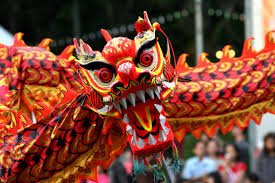
Chinese New Year begins with the new moon and follows the Lunar calendar. In 2027, this falls on 6th February. Lunar Chinese New Year is a time of celebration, bringing together family and friends from around the world to welcome the year ahead. Traditional festivities are often filled with delicious food and drinks, vibrant flowers and colourful decorations, spectacular fireworks, elaborate dragon processions and the giving of lucky red Ang Pow envelopes.
The Solar New Year, however, follows a different calendar and begins on 4th February 2027. While the Lunar New Year marks the occasion for traditional celebrations, the Solar New Year is particularly important in Feng Shui, as this is when the annual Flying Stars change and your annual cures and enhancers should be put in place. It is therefore important to understand the distinction between the two dates.
The Lunar New Year follows the Winter Solstice and symbolises new beginnings and fresh starts. It offers an opportunity to reflect on the year gone by, carry forward the positives, and leave any negativity behind. It is also a time to express gratitude and appreciation for the goodness in the world, while honouring family and friends, both past and present.
In the lead-up to Chinese New Year, it is encouraged to spend some time preparing yourself, your home and your workspaces for the year ahead. Visualise how you want to enter the New Year, practise gratitude, acknowledge your achievements, learn from past mistakes, and set meaningful goals for all areas of your life. Your surroundings should reflect this fresh start, with clean, organised spaces free from unnecessary clutter. A harmonious environment can help you feel happier, more motivated and ready to achieve great things, allowing you to become the very best version of yourself.
There are also several traditional Chinese New Year customs that carry symbolic meanings. Sweeping the home, for example, represents the removal of ill fortune. Deep cleaning, clearing clutter and organising your surroundings also help to remove stagnant Chi, encouraging the fresh, positive flow of energy throughout your home.
Although I try to keep on top of cleaning, clutter and organisation throughout the year, we always make a special effort in the days leading up to Chinese New Year. This means being a little more thorough, pulling out the furniture, clearing forgotten corners and even exploring those cupboards that rarely see the light of day!
All that hard work will be worthwhile, leaving your home refreshed, your energy renewed and everything ready for the celebrations to truly begin.
Lunar Chinese New Year: the date that you celebrate – 6th of February 2027
Solar Chinese New Year: the date that you place your annual Cures and Enhancers – 4th February 2027.

For details on the day and time the Lunar and Solar Chinese New Year starts in your country, click here.
What happens during the Chinese New Year?
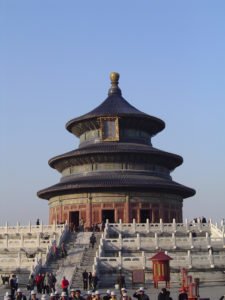
Celebrating Chinese New Year has long been a tradition for Daniel and me, and we both look forward to it each year. For me, it is the perfect opportunity to enjoy the rewards of all the preparation, both personally and within our home. It is a day to be present, put aside any worries about the past or future and simply enjoy the moment. A chance to spend time with family, share good food, embrace the celebrations and look forward to all the exciting possibilities the year ahead may bring.
This year, however, things may be a little different! My second baby is due during the week of Chinese New Year, so although I will do my utmost to keep up our family traditions, exactly how and where we celebrate remains a little uncertain.
One thing I am determined to make happen is for my little boy Lochie to enjoy the celebrations, one way or another. He is now old enough to really appreciate the excitement, and seeing his face light up as he receives his lucky red Ang Pow envelopes and enjoys all the delicious food makes it even more special. His enthusiasm is infectious, and I love seeing him become part of something that has been such a big tradition in our family.
Lochie gets double the celebrations, not only at home but at nursery too, and I always look forward to seeing what little creations he brings home at the end of the day. His nursery dedicates an entire week to Chinese New Year, with the children taking part in a wonderful range of activities that are not only great fun but also offer plenty of opportunities to learn about the traditions and culture. In previous years, they have carved wooden snakes, decorated Ang Pow envelopes and made colourful lanterns. I can’t wait to see what their little imaginations come up with for the Year of the Goat!
Most of our Chinese New Year celebrations tend to take place at home, which I absolutely love. There really is no better feeling than being surrounded by family and friends, enjoying good food and sharing the occasion together. However, I’ve also been fortunate enough to experience the celebrations in London on previous occasions, and what an atmosphere! The vibrant colours, spectacular dragon parades and the sheer excitement and happiness on everyone’s faces make it an unforgettable experience.
It is something I would love to do again in future years with Lochie, perhaps even venturing further afield to experience celebrations in another part of the world. If you ever get the opportunity to visit somewhere that celebrates Chinese New Year on a grand scale, I would wholeheartedly recommend it. The atmosphere is infectious, and you can’t help but be swept up in the happiness, excitement and positive energy. It’s the ultimate feel-good experience and a wonderful way to welcome the New Year!
Although the Solar (Hsia) calendar marks the beginning of the New Year at the start of Spring, which usually falls between 3rd and 4th February, the Lunar (Yueh) calendar follows a different cycle. It marks the New Year on the second new moon following the Winter Solstice, which is when the traditional Chinese New Year celebrations and festivities take place. Also known as the ‘Spring Festival’, Lunar Chinese New Year falls on 6th February 2027.
When is Chinese New Year 2027?
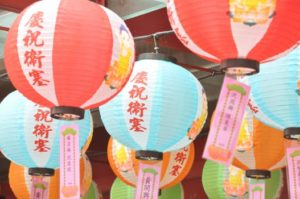
The Lunar Chinese New Year will fall on the 6th of February 2027 and this is the day to celebrate with family and loved ones. The Lunar year will end on the 26th January 2028.
The Lunar New Year is not to be confused with the Solar Chinese New Year which commences on 4th February 2027. This is the day you will place your annual Cures and Enhancers.
If purchasing any cures it is advised when you receive them to open the box and ensure all of the contents are present and there is no damage. This will give you enough time to repair/replace any damaged items. Once satisfied all of the cures and placements are good to go you can put them back in the box until the day of placement.
For details on the day and time, the Lunar and Solar Chinese New Year starts in your country, click here.
For information on the Lunar New Year and the 2026 Flying stars, you will find full details on THIS LINK.
Interesting Facts for Chinese New Year 2027
- The Chinese phrase for the Yin Fire Goat Ding Wei
- Goat Years: 2027, 2015, 2003, 1991, 1979, 1967, 1955, 1943, 1931
- Best careers for the Goat- Actor/Actress, Counsellor, Diplomat, Musician
- The Goat personality: The Goat is an imaginative and creative person with a love for the finer things in life. They are easy-going and prefer a relaxed, calm environment. They do not like to stick to a routine or timetable. They like to take their time doing things and do not like to rush, as they are perfectionists and will give 110 per cent in anything they do. The goat usually prefers to work with large groups rather than on their own. They like the support of colleagues, as they can get a bit nervous if they are left to do something by themselves. They will try to leave major decisions to others whenever possible, although they will put their point across if they feel strongly about something.
- Famous Goats: Bill Gates, Billy Idol, Coco Chanel, Sir Mick Jagger
- Goat Protection Animal: Horse
- Goat conflict Animals: Ox, Tiger, Dog
- Auspicious Flowers for the Goat Year: Peony, Camellia, Orchard, Plum Blossom, Sunflower
- Auspicious Numbers for the Goat Year: 2, 7
- Inauspicious numbers for the Goat Year: 4, 9
- Auspicious colours for the Goat Year: Red, Purple, Orange, Pink, Green
- Inauspicious colours for the Goat Year: Blue, Black, Yellow, White, Silver
- Chinese New Year is also known as the Spring Festival, and in China Chunjie (春节)
- It is the longest of the Chinese holidays
- No bathing, sweeping or throwing out rubbish allowed!
- You are expected to eat dumplings for every meal, every day
- Chinese New Year ends with the Lantern Festival
How do I prepare for Chinese New Year 2027?
The earlier, the better! Preparing for Chinese New Year involves quite a list of things to do, so allow yourself plenty of time to get everything organised. In our busy modern lives, something always needs doing, or something unexpected crops up at short notice. Much of our time is spent juggling everyday responsibilities, so it is easy to underestimate just how much there is to do before the New Year arrives.
By starting early and setting aside enough time to prepare, you can enjoy a calmer, more positive build-up to the celebrations. Rather than rushing around trying to finish everything at the last minute, you will have the opportunity to sit back, appreciate your freshly transformed space and welcome the new energy that will support and guide you into the year ahead.
It is believed that we start the New Year as we mean to go on, so we want our energy to feel bright, light and uplifted. Starting the year positively can positively influence all areas of our lives. If you don’t already practise mindfulness, now is the perfect time to introduce it into your daily routine. Learning to appreciate the present moment and find a little peace amid the everyday chaos can make a huge difference, particularly when you need motivation and encouragement to work through your pre-New Year to-do list.
One thing I have found helpful is changing the way I approach household chores. Instead of viewing them as another job to tick off the list, I like to think of them as an opportunity to enjoy some much-needed headspace. Many everyday tasks don’t require much thought, so why not put on a favourite playlist and enjoy the process? Movement benefits your physical health, and the endorphins released after even a little activity can quickly lift your mood and leave you feeling more energised.

Like me, you may feel that you regularly stay on top of your surroundings, keeping everything clean, tidy and relatively free from clutter. However, I often find that I haven’t allocated nearly enough time to do the job as thoroughly as I would like. A proper pre-New Year clean means looking beyond the obvious and making sure those often-forgotten areas are given some attention too.
Cleaning behind furniture, removing dust from overlooked corners and giving everything a thorough freshen-up will help clear away any accumulated stagnant or stale Sha Qi (energy), encouraging fresh Qi to enter and circulate throughout your home. Don’t forget your houseplants either. These beautiful living additions to our spaces are often overlooked when cleaning, but a little attention and dusting can refresh them and give them a new lease of life.
Pay particular attention to your windows and doors, as these are the main entry points for Qi into your home. Keeping them clean and welcoming helps create the perfect environment for fresh energy to enter. One of my favourite finishing touches, once everything is clean, is putting down a brand-new doormat. There’s something wonderful about laying a fresh mat in your hallway and giving your entrance a completely new feel!
Clutter that has accumulated throughout the year should also be thoroughly sorted. As William Morris famously said, “Have nothing in your house that you do not know to be useful, or believe to be beautiful”. This is a good principle to follow, not only when decluttering your home but also your workplace.
Take the opportunity to go through cupboards, drawers and storage areas, letting go of anything you no longer need. This includes broken or damaged items that may have been sitting around waiting to be repaired. Of course, sentimental belongings are a little different. If something holds special meaning, there is no reason to part with it, but consider whether it could be repaired, given a new lease of life, or safely stored away rather than left taking up space.
As we prepare to welcome a new year, it is worth looking beyond our physical surroundings and considering the areas of our lives that we would like to improve. We want to enter 2027 as we hope the year will unfold, so pay particular attention to your finances, relationships and health.
Where possible, try to settle outstanding debts, return anything you have borrowed and collect items that belong to you. If there have been disagreements or unresolved issues with loved ones, consider making amends and finding a way forward. Also, think about small changes you could make to improve your well-being, such as adding more fresh fruit and vegetables to your diet, reducing alcohol and caffeine, and making time for regular exercise.
These may seem like small steps, but together they can help you enter the New Year feeling healthier, happier and more positive, with a clearer mindset and a renewed sense of purpose about what you would like to achieve.
A summary of a few things to help you prepare for the New Year:
- Clear the clutter
- Remove all broken and damaged items
- Deep clean including behind the furniture and dusting the plants
- Clean windows and doors
- Avoid disputes, and try to make amends
- Reduce alcohol and caffeine intake
- Add more fresh fruit & veg into your diet
- Incorporate daily exercise- simply taking the stairs more
- Practice mindfulness
- Pay off debts, return and collect borrowed items
Most importantly, give yourself enough time to enjoy the process. Preparing for the Chinese New Year shouldn’t feel like another stressful to-do list. Think of it as a chance to refresh your surroundings, clear away the old, and make space for all the wonderful possibilities 2027 may bring.
I’ve finished cleaning my home, now what?

Once you’ve finished cleaning, there is one final task that is often overlooked, and I must admit, it’s one I sometimes forget myself! Make sure you thoroughly clean and put away all your cleaning equipment. This includes your broom, dustpan, hoover, cloths and anything else you’ve used along the way.
It may seem like a small detail, but there is little point in giving your home a fresh start if you leave your cleaning equipment dirty or lying around. Keeping everything clean and stored neatly out of sight helps maintain the fresh, positive energy you’ve worked so hard to create. It also means everything is ready for the next time you need it!
Another important consideration when preparing for the Chinese New Year is the use of colour throughout your home and workplace. Red is perhaps the colour most commonly associated with Chinese New Year, and you’ll often see it used in decorations and displays to symbolise luck, fame and good fortune for the year ahead.
In Feng Shui, red represents the Fire element, the most powerful of the five elements. Although it can be incredibly beneficial when used correctly, it is important to understand how and where to introduce it. Adding too much of the wrong colour to a particular area can have an unintended effect, so my advice is to keep your surroundings as natural as possible unless you are confident in the five elements and their associated colours.
If you would like to introduce a little more red into your home or workplace, start with smaller decorative touches rather than making dramatic changes. Most importantly, refer to the 2027 Flying Star analysis to understand which areas will benefit from the Fire element and where it is best to avoid introducing additional red.
Protective talismans

Protective talismans are another important part of Chinese New Year preparations. Traditionally, these auspicious charms are used to ward off negative influences and protect the occupants of a home or workplace throughout the year. Place them around the home, office, or business, and leave them in place during the Year of the Yin Fire Goat to help attract good fortune and provide protection.
If you’re unfamiliar with these traditional charms, click here to discover why protective talismans are used and to download your own free printable copies.
These powerful protective talismans and auspicious couplets can be found displayed in buildings and homes all around the world. Traditionally, they are printed onto thick paper or card, often featuring red lettering or a red background. This is no coincidence, as red holds great significance in Chinese culture. It is considered a life-giving and auspicious colour, associated with summer, the South, the Vermilion Bird (a celestial creature often likened to the Phoenix) and the Fire element.
Displaying these talismans is a wonderful way to embrace traditional Chinese New Year customs while welcoming protection, positivity and good fortune into your surroundings for the year ahead.
The use of Flowers and plants during Chinese New Year

Flowers and plants are another important part of Chinese New Year preparations. It is traditional to fill the home and workplace with bright, fresh and healthy flowers and plants, particularly those that are in bloom. They symbolise rebirth, renewal and new growth, making them a wonderful way to welcome the energy of the New Year.
Some of the most popular choices include bamboo, peonies, plum blossom and chrysanthemums, each carrying its own auspicious symbolism. These plants and flowers are traditionally associated with prosperity, wealth, good fortune and success, including achieving a respected position in your career.
There is also a traditional belief that having no flowers in your home or business during Chinese New Year can result in a lack of fruitfulness during the year ahead. This makes them more than just a decorative addition; they are considered an important symbol of abundance and the potential for new opportunities. It is even believed that if a plant flowers inside your home or workplace on New Year’s Day, it brings particularly powerful good fortune to the property and everyone living or working there throughout the year.
Don’t forget to give your existing houseplants a little extra attention too. Make sure they are healthy, watered regularly and free from dust, removing any dead or damaged leaves along the way. After all, we want the plants around us to reflect the fresh, vibrant, and flourishing energy we hope to attract into our lives in the year ahead.
The use of Fruit during Chinese New Year
Fruit is another popular addition to the home during Chinese New Year, traditionally displayed in the kitchen or dining area as a symbol of abundance, prosperity and good fortune. A simple bowl of fresh fruit, particularly oranges, makes a lovely addition to your New Year preparations.
When arranging fruit, it is customary to use even numbers, with eight being particularly auspicious in Feng Shui as it is associated with wealth, prosperity and good fortune. Try placing a bowl of eight oranges on your kitchen or dining table to welcome these positive associations into your home.
For me, the smell of fresh citrus fruit around the kitchen has always been particularly significant. It’s a scent I associate with the promise of a New Year and all the exciting possibilities ahead. Oranges are also especially popular because of their vibrant colour, which is associated with gold and symbolises wealth and prosperity in Chinese culture.
Alongside traditional red decorations, the beautiful golden-orange tones of fresh citrus fruit bring warmth, colour and a wonderful sense of celebration into the home.
Kitchen God
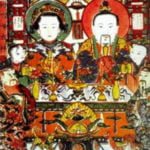
In traditional Chinese households, Lunar New Year preparations often begin well before the celebrations themselves. Around a week before the New Year, families will traditionally perform religious ceremonies and make offerings in honour of Heaven (Tien Shen), Earth (Ti Tu), household deities and their family ancestors.
One of the most well-known deities associated with these traditions is the Kitchen God, also known as the Stove God.
The Kitchen God is believed to watch over the household, observing the family’s daily activities and interactions throughout the year. According to tradition, he compiles an annual report of the family’s behaviour and presents it to the Jade Emperor in Heaven approximately a week before Chinese New Year. On this occasion, families make offerings and perform rituals in his honour, hoping he will give a favourable account of their activities. The Kitchen God is also known as Zao Jun (Zhou Khun).
In our household, we put up our Kitchen God talisman the evening before Chinese New Year and tend to leave him in place throughout the year. It’s a lovely tradition to incorporate into your own preparations, and if you would like to do the same, I’ve included a link below where you can download and print your own copy to display in your kitchen.
The reunion dinner
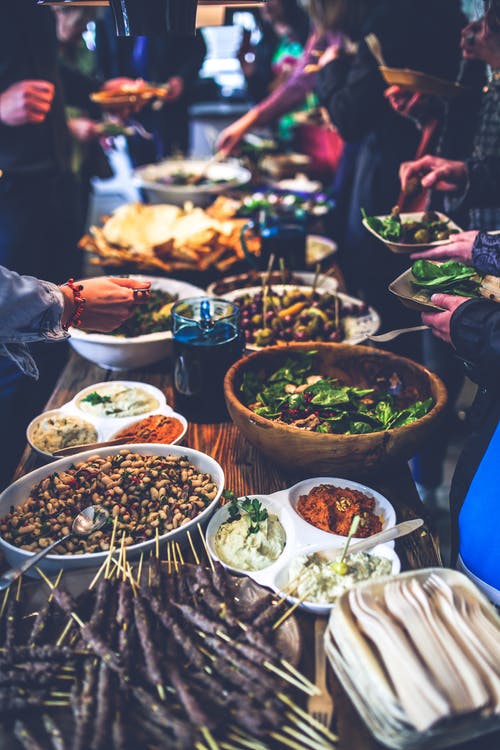
One of the most cherished highlights of Chinese New Year is the reunion dinner. This is a very special occasion when family members come together, often travelling considerable distances, to share a grand feast and celebrate the arrival of the New Year. Traditionally, younger generations return to their parents’ or grandparents’ homes, bringing the whole family together under one roof. It is an eagerly anticipated occasion and one that holds great significance in Chinese culture, symbolising family unity, respect and togetherness.
The journey home is an important part of the celebrations. Much like the Christmas period in the West, travel across China becomes incredibly busy, with flights and other transport often becoming more expensive as millions of people make their way home to reunite with loved ones. For children returning to their family homes, this journey is considered an important gesture of respect for their elders and a way to show how much they value family.
Traditionally, a married couple would spend Chinese New Year with the husband’s family. However, as family life and traditions evolve, it is increasingly common for couples to divide their time between both sets of parents or alternate each year, much like the arrangements many families make for Christmas or Thanksgiving.
The reunion dinner itself is a wonderful feast, with the dining table filled with an array of beautifully prepared dishes. Many of the foods served have symbolic meanings, with particular ingredients and dishes chosen to attract prosperity, happiness, fertility, and good fortune for the year ahead.
Before sitting down to eat, families traditionally gather at the family altar to pay their respects and offer prayers to their ancestors and household deities. Food and other offerings are presented as a way of expressing gratitude and seeking blessings for the family in the coming year.
Many of the dishes served during the reunion dinner carry auspicious meanings. Some traditional examples include:
- Ginkgo nuts: Resembling gold ingots, these are associated with wealth and prosperity and are also traditionally linked with fertility.
- Black moss seaweed: A particularly auspicious ingredient associated with prosperity and financial good fortune.
- A whole chicken: Traditionally served with its head and feet intact, representing completeness, family unity and prosperity.
- Dried bean curd: Associated with happiness, good fortune and blessings.
- Lotus seeds: Symbolising fertility and the hope of having many children and descendants.
- Nian Gao: A traditional sweet, steamed glutinous rice cake associated with growth, progress and abundance.
- Bamboo shoots: Symbolising growth and good fortune, with their Chinese name carrying associations with wishing that everything turns out favourably.
- A whole fish: Traditionally served with the head and tail intact, representing completeness and togetherness. Fish is also associated with abundance, as the Chinese word for fish sounds similar to the word for surplus, symbolising having more than enough throughout the year.
There are many other traditional dishes, and the exact selection will vary between families and regions, but the underlying sentiment is always the same: to welcome abundance, happiness and good fortune into the household.
In the lead-up to the reunion dinner, preparations would traditionally be divided between family members. Women would often gather in the kitchen to prepare the many dishes, while the men might catch up with one another or enjoy watching television. Thankfully, these roles have become much more flexible over the years, and it is increasingly common for everyone to get involved with the cooking and preparations.
 Another popular activity before the meal is a family game of Mahjong. If you haven’t played before, Mahjong is a traditional tile-based game that requires skill, concentration and a good memory. Players take turns drawing and discarding tiles, aiming to complete a winning combination of four sets and a pair. The game is often associated with gambling, and it isn’t unusual for considerable amounts of money to change hands during a competitive family game! Keeping track of the tiles that have already been played and those still in circulation requires a sharp memory, so it can certainly become quite competitive.
For the younger children, Chinese New Year is an especially exciting time. They will traditionally be bathed and dressed in fresh pyjamas, often purchased in the days leading up to the celebrations. Wearing new clothes symbolises a fresh start and new beginnings, helping the children welcome the year ahead looking their very best.
As bedtime approaches, little ones are often told that Tsai Shen Yeh, the God of Wealth, will visit while they sleep. Imagine their excitement when they wake the following morning to discover a red envelope, known as an Ang Pow, tucked beneath their pillow! It’s a lovely tradition, rather like the excitement children experience when waiting for the Tooth Fairy.
Children will also traditionally receive Ang Pow red envelopes containing money from their grandparents and other older family members. The amount can vary depending on the relationship and circumstances, with parents often giving more than aunts and uncles. The tradition is all about sharing blessings and passing good fortune to the younger generation. Of course, if you happen to have a particularly large family and have suffered a few expensive defeats around the Mahjong table, you might find the generosity of the red envelopes puts an additional dent in your finances!
As the old year draws to a close, the celebrations traditionally reach an exciting climax with the spectacular sounds and displays of fireworks. Across China and in Chinese communities worldwide, the loud bangs and bursts of colour are believed to frighten away evil spirits, including the legendary Nian monster. They also symbolise sweeping away the old year’s energy (Qi) and welcoming fresh beginnings, prosperity and good fortune.
Unfortunately, in the UK, fireworks are subject to restrictions and local regulations, so large-scale displays and traditional firecracker celebrations aren’t always possible without the necessary permissions. As a result, this particular tradition has become less visible in many communities over the years. However, there are still plenty of wonderful ways to enjoy the excitement and energy of Chinese New Year.
One tradition that continues to capture the imagination of young and old alike is the spectacular Dragon Dance. During these performances, a team of dancers, sometimes numbering up to ten or more, work together beneath an elaborate dragon costume, bringing this magnificent creature to life.
Using a series of poles, the performers raise, lower and twist the dragon, making it weave and dance through the streets as it follows a pearl of wisdom. This pearl represents wisdom, knowledge and enlightenment, tempting the dragon to follow it as the performance unfolds.
Accompanied by the thunderous rhythm of drums, cymbals and gongs, the atmosphere is electric. The music creates an incredible sense of energy and excitement, with the dragon twisting, turning, and chasing the pearl through the crowds. It is a wonderful spectacle that brings communities together, and the enthusiasm of the performers and spectators makes it an unforgettable part of the Chinese New Year celebrations.
The tradition of the Dragon Dance during Chinese New Year
The Dragon dance can be dated back to the Han Dynasty (202BC – 22AD) and was traditionally used as a ceremonial practice, offering respect and worship to ancestors and also to pray for rain during the year ahead, bringing fresh and bountiful crops for the village.
These days, the Dragon dance is more commonly known for entertainment rather than a dance of worship, and as of the Tang and Song dynasty, this was adopted as a crucial part of the celebrations over Chinese New Year.
The traditional storage location for the Dragon costume, when not in use, would have been in a Dragon king temple and would be collected from the temple on the day of the dance by members of the Dragon dancers. Being a dancer in the Dragon costume is a very skilled and tiring role, and they will usually practice the routine throughout the year as each turn and movement must be done to the beat of the drum.
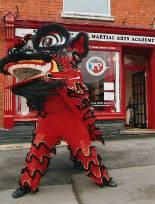
The Dragon dance comes with some interesting practices, and each has a different meaning.
- The body is attached to the head and is known as the ‘eye pointing’ ceremony
- There will be a performer walking in front of the dragon who is holding a long pole with a large ball at the end, signifying the pearl of wisdom, and the dragon will follow its every move, turning in carefully choreographed turns along the way
- When the dance is finished, the traditional practice is to burn the dragon’s head and tail and then return the dragon’s body to the dragon king’s temple. This is believed to return the dragon to ‘dragon heaven’ and bring good weather for crops in the year ahead. A new head and tail would be made at some point in the year, symbolising new beginnings
- Another common belief is that the burning dragon will repel bad luck and disasters for the year ahead.
What does the Lion dance have to do with Chinese New Year?
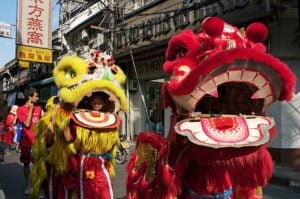
Yet another fascinating performance during Chinese New Year is the lion dance, also referred to as the lion lantern, akin to the Dragon dance but carrying distinct symbolism. The lion dance is typically executed on a smaller scale, with two men donning the lion costume, which features a mirror on top of the lion’s head to ward off evil spirits. With rhythmic drumbeats and the accompaniment of a gong, the lion dancers navigate the streets. Inside the costume, the performers mimic the movements of a real lion, executing precise and pre-planned choreography throughout the dance.
As the dancers inside the lion costume make their way along the street, they encounter another dancer dressed as a laughing Buddha. This Buddha figure dons a monk’s robe and a mask while holding a fan made of banana leaves. In the dance, the Buddha’s playful role involves teasing the lion by waving the fan in front of its face, guiding the lion along the street. For those who have witnessed a live lion dance, the memory often includes shredded lettuce scattered across the street. People hang lettuce, adorned with money, outside their homes and businesses as an offering to the dancers, symbolizing new beginnings in the upcoming year. When the lion reaches for the lettuce, it keeps the money and playfully shreds and spits out the lettuce along the street. It is considered highly auspicious if the lion takes your lettuce during this festive dance.
Common practices during Day One of Chinese New Year
By now, you’ll probably have noticed that almost everything associated with Chinese New Year carries its own special meaning, and the traditions continue right through to the very first day of the New Year. From the clothes we wear to the words we exchange and the gifts we give, each custom is meant to welcome happiness, prosperity, and good fortune in the year ahead.
The celebrations usually begin with exchanging New Year greetings and good wishes with family and friends. Everyone will make an effort to look their best, wearing new or freshly purchased clothes as a symbol of fresh beginnings. It is also customary for older family members to give Ang Pow red envelopes containing money to the younger generation, wishing them happiness, health and good fortune. Unmarried adults may also receive red envelopes from their parents, grandparents, aunts and uncles, making this an exciting part of the day for many.
Giving Ang Pow is a little like exchanging presents at Christmas, although the money inside carries its own special symbolism. When preparing red envelopes, it is considered particularly auspicious to give an even amount, such as £8 or £20. The amount usually depends on your relationship with the recipient and the family’s circumstances. To learn more about the significance of red envelopes and how they are traditionally used, click here to read our guide to Ang Pow.
As the day progresses, families will often venture out to visit aunts, uncles, grandparents and close friends to exchange further greetings and good wishes. Traditionally, visits are made in order of seniority, starting with the oldest family members. This usually means visiting grandparents or great-grandparents first, followed by aunts, uncles and other relatives.
For children, this is often one of the most exciting parts of Chinese New Year! As they visit each family member, they will exchange greetings and wish them prosperity for the year ahead, often receiving an Ang Pow in return. One of the most familiar greetings is “Kung Hei Fat Choy”, which translates as a wish for happiness and prosperity.
It’s a lovely tradition that brings generations together, reinforces family bonds and ensures the New Year begins with plenty of warmth, generosity and positive wishes.
What happens on Day two of Chinese New Year?

The second day of Chinese New Year is traditionally known as ‘Kai Nien’, which translates as the ‘beginning of the year’. As with much of the Chinese New Year celebrations, family remains at the heart of the day. Traditionally, families will start with an early breakfast together, continuing the celebrations with more food, laughter and time spent with loved ones.
The main meal of the day is another important occasion, with the table usually filled with an assortment of delicious dishes, each carrying its own auspicious name and symbolism. One particularly interesting tradition involves serving a large bowl of long noodles, which are believed to represent longevity and a long, healthy life.
During this meal, family members will traditionally stand up, raise their chopsticks and toss the noodles high into the air, symbolising their wishes for longevity, happiness and good fortune in the year ahead. It can be quite a spectacle, with everyone joining in and noodles flying in every direction! If you’ve ever witnessed this tradition, you’ll know that not all the noodles necessarily make it back onto the plates, and some may even end up stuck to the ceiling!
Another custom during the Chinese New Year period is to be mindful of alcohol consumption. Traditionally, excessive drinking is discouraged, as it is believed that overindulgence can invite difficulties into the year ahead. Instead, people widely enjoy green tea throughout the celebrations, often served alongside modest amounts of traditional Chinese wine. The emphasis is on enjoying the occasion, sharing food and spending quality time together.
By the end of the first two days, families will usually have enjoyed an extraordinary amount of food, entertainment and games. Chinese New Year is certainly not a time for holding back when it comes to preparing a feast! Food has a particularly important place in Chinese culture throughout the year, but its symbolism becomes even more significant during the New Year celebrations.
Almost everything served at the table has a meaning behind it, with even everyday ingredients such as fish and turnips carrying auspicious associations. Fish balls and meatballs are also particularly popular, as their round shapes symbolise completeness, togetherness and family reunion.
Ultimately, the second day continues the theme of welcoming good fortune through family, food and tradition, setting the tone for a happy and prosperous year ahead.
What happens on Day three of the Chinese New Year?
After two full days of celebrations, family gatherings and enjoying plenty of delicious food, it’s hardly surprising that many people are ready for a little rest! The third day of Chinese New Year is traditionally quieter, offering much-needed time to relax and recharge after the excitement of the first two days.
Rather than continuing with the busy schedule of family visits and celebrations, people will generally take things at a slower pace. The younger generation may choose to catch up with friends, while others prefer to relax at home.
Traditionally, the third day is also considered an inauspicious day for social visits, so people tend to avoid visiting friends and relatives or hosting guests. It is a welcome opportunity to enjoy some downtime before the festivities continue.
What happens on Day four of the Chinese New Year?
By the fourth day, a sense of normality gradually returns, with more businesses and shops preparing to reopen after the New Year celebrations.
For many business owners, reopening is an important occasion, and great care is often taken to select an auspicious date and time. The Tong Shu Almanac is traditionally consulted to identify a favourable time to welcome customers back and ensure the business gets off to a prosperous start.
One of the most exciting ways to celebrate a business reopening is with a traditional Lion Dance, often accompanied by the loud bangs of firecrackers. These colourful, energetic performances attract plenty of attention from employees, customers, and passersby alike.
The Lion Dance is believed to bring prosperity, success and good fortune to the business, helping to welcome positive energy and abundance for the year ahead. It is a wonderful way to mark the reopening, creating an exciting atmosphere and giving everyone something to celebrate as normal business resumes.
Chinese New Year continued.
Although the main celebrations take place during the first few days of Chinese New Year, the festivities don’t end there! Traditionally, celebrations continue for another eleven days, culminating in the first full moon of the lunar year and the beautiful Spring Lantern Festival, known as ‘Yuan Xiao Jie’, on the fifteenth day.
The Spring Lantern Festival is a spectacular occasion, with celebrations taking place beneath the light of the first full moon of the New Year.
People of all ages, from young children to grandparents, take part by carrying beautifully decorated, colourful lanterns. Families and communities gather in public spaces, parks and town centres to admire the lantern displays, enjoy the festivities and celebrate the arrival of the first full moon. There are similarities with the Mid-Autumn Festival, which also places great importance on the full moon and family togetherness.
Another lovely tradition associated with the Spring Lantern Festival is eating Tang Yuan, sweet glutinous rice dumplings traditionally served in a warm broth. In some villages throughout China, large communal cooking and eating celebrations are still held, bringing entire communities together to enjoy these delicious little dumplings. It’s something I would absolutely love to experience one year, although, as you can imagine, Chinese New Year is an incredibly busy time for us!
The dumplings are traditionally round, symbolising completeness, family unity and togetherness. Sharing them with loved ones represents the hope that families will remain close, happy and united throughout the year ahead.
The Spring Lantern Festival is a wonderful way to bring the Chinese New Year celebrations to a close. After days of family gatherings, traditions, food and festivities, the first full moon provides a beautiful and symbolic ending to the New Year celebrations, welcoming the promise of spring and all the opportunities that lie ahead.
What can I do before the New Year to achieve good luck?
- Give your home and workplace a thorough clean. Make sure your house, flat, office, shop or any other building is spotless from top to bottom. This is believed to clear away stagnant energy and encourage good luck for the coming year. In our household, we usually allow two to three days to clean every single area of our home. It can be quite time-consuming, but the feeling afterwards is absolutely wonderful!
- Prepare your Feng Shui Cures and Enhancers. Make sure all your annual Cures and Enhancers have been cleansed, prepared and are ready for placement on 4th February 2027. Remember to check our World Time Converter to establish the correct local time for your location when placing your 2027 Feng Shui Cures and Enhancers.
- Open your windows and doors. Weather permitting, open windows and doors throughout your home to let fresh air and new Qi circulate. This is traditionally believed to welcome fresh opportunities, good luck and positive energy into the property.
- Have a refreshing bath. Bathing before the New Year is an important traditional practice. In some Chinese customs, people bathe using pomelo leaves, which are believed to cleanse away negative influences and promote good health and protection for the year ahead. Pomelo is a large citrus fruit, and both the fruit and its leaves are traditionally associated with cleansing and good fortune. Just be sure not to bathe on Chinese New Year because it is believed to wash away your luck for the year ahead.
- Buy new slippers. Some households traditionally buy a new pair of slippers before Chinese New Year. This is believed to help prevent gossip and negative talk about you during the year ahead. Reputation and maintaining good relationships are particularly important in Chinese culture.
- Settle outstanding debts. Where possible, try to pay off money you owe before the New Year begins. It is also a good time to return borrowed belongings and collect anything that belongs to you.

Traditional customs and things to avoid on Chinese New Year’s Day
Many traditional beliefs surround the first day of Chinese New Year. The underlying principle is that whatever you do on New Year’s Day is believed to influence how the rest of your year will unfold. Consequently, people traditionally take extra care with their words, actions and behaviour.
Although customs vary between families and regions, here are some of the most commonly observed traditions.
Things to avoid:
- Avoid negative conversations. Keep conversations positive and avoid talking about death, illness, misfortune or anything unpleasant. Even watching horror films or films with negative connotations is traditionally avoided, as it is believed to invite negative thoughts and influences into the year ahead.
- Don’t cry or become angry. Avoid crying, shouting or losing your temper, particularly with children and other family members. It is believed that doing so could set the tone for sadness and disagreements throughout the year.
- Avoid arguments and disagreements. Everyone should be in a celebratory mood, so try to remain patient, positive and considerate towards others. Arguments on New Year’s Day are traditionally believed to encourage further disputes throughout the year.
- Don’t wash or cut your hair. In Chinese, the word for hair is associated with the word ‘fa’, meaning prosperity. Washing or cutting your hair is therefore traditionally interpreted as washing or cutting away your prosperity. It is also considered unlucky to cut your nails on this day, as this is believed to bring pain or difficulties to your family relationships.
- Don’t wash clothes. Chinese New Year’s Day is traditionally regarded as the birthday of the Water God, so washing clothes on this day is avoided out of respect. It is also believed that washing could wash away good fortune.
- Don’t sweep or throw away rubbish. Avoid cleaning or taking rubbish outside on New Year’s Day, as you could inadvertently sweep or throw away the wealth and good luck that has entered your home. Ideally, have all your cleaning completed beforehand.
- Don’t take a lunchtime nap. Sleeping during the middle of the day is traditionally discouraged, as it is believed to encourage laziness throughout the year ahead.
- Avoid buying books. The Chinese word for book, ‘Shu’, sounds similar to a word associated with losing. Purchasing books during the first few days of the New Year is therefore traditionally avoided, as it is believed to symbolise loss.
- Avoid buying shoes. In Mandarin, the word for shoes sounds similar to a word associated with evil, while in Cantonese it can have associations with roughness. For this reason, buying shoes during the New Year is traditionally considered unlucky. New slippers, however, are an exception in some customs.
- Avoid wearing black or white. When visiting friends and family, try to avoid wearing these colours, as they are traditionally associated with mourning and funerals. Red and orange are much more auspicious choices, symbolising happiness, vitality and good fortune.
- Avoid eating porridge for breakfast. Rice or oat porridge is traditionally associated with poverty and hardship, so eating it on New Year’s morning is believed to symbolise a lack of wealth. Fresh fruit makes a much more auspicious breakfast.
- Avoid eating meat at breakfast. Some traditional beliefs suggest that vegetarian deities visit on Chinese New Year’s Day, so eating a vegetarian breakfast is considered a respectful way to welcome them.
- Avoid using knives and scissors. Traditionally, women would refrain from using sharp kitchen utensils on New Year’s Day. Knives are associated with danger and anger, while scissors are believed to symbolise cutting relationships or severing good fortune. This is also why many families prepare their meals in advance and enjoy leftovers from the previous day’s reunion dinner.
- Avoid breaking crockery. Smashing a plate, bowl, cup or other household item is considered particularly unlucky, with traditional beliefs associating broken crockery with financial difficulties. If something does break, some customs recommend carefully gathering the pieces and wrapping or storing them until the next rubbish collection.
- Avoid collecting debts. Don’t chase people for money or demand repayment of outstanding debts on New Year’s Day. It is believed that doing so could result in spending the rest of the year chasing money.
- Don’t let people take money from your pockets or wallet. Allowing someone to remove money from your pockets, purse or handbag is traditionally associated with financial loss throughout the year. Naturally, it is also worth keeping an eye on your belongings when out celebrating!
- Avoid giving money in groups of four. The number four is considered inauspicious in Chinese culture because its pronunciation sounds similar to the word for death. When preparing Ang Pow red envelopes, avoid amounts such as £4, £24, £34 or, particularly, £44. Even numbers are generally preferred, with eight being especially auspicious.
- Avoid visiting households connected to a recent bereavement. Some traditional customs advise against visiting the home of a family who have recently experienced a bereavement during the New Year celebrations, as this is believed to bring inauspicious influences.
- Avoid waking someone by calling their name. According to one traditional belief, calling somebody by their name to wake them on New Year’s morning could mean they become dependent on you to motivate them throughout the year.
- Avoid unnecessary medication. Traditionally, taking medicine on New Year’s Day is associated with illness and weakness during the year ahead. However, this is purely a cultural superstition. Essential prescribed medication and necessary treatment must always be continued as normal. Never delay or stop medication for the sake of a New Year tradition.
A few additional customs to remember
- Keep the children happy. Traditionally, parents avoid disciplining or punishing their children on New Year’s Day, as this is believed to encourage arguments and disagreements throughout the year. Even particularly naughty children may be allowed a little extra freedom until the celebrations have passed!
- Keep the lights on. Switch on the lights throughout your home, inside and out, to create a bright, welcoming environment. Traditionally, bright lights are believed to attract good fortune and help frighten away evil spirits. Combined with open windows and doors, they symbolise welcoming fresh luck into your home.
- Be careful when handling money. Don’t let anyone take money directly from your pockets, purse, or wallet, and try to avoid unnecessary spending or lending on New Year’s Day.
- Enjoy a positive start to the year. Whatever you do, try to remain happy, optimistic and surrounded by people you love. The emphasis is on welcoming the New Year with a positive attitude and setting the right intentions for the months ahead.
The underlying belief behind many of these traditions is that whatever you do on Chinese New Year’s Day will set the tone for the rest of the year. Whether you follow every custom or simply choose a few that resonate with you, the most important thing is to enjoy the celebrations, spend quality time with family and friends, eat well and welcome the New Year with happiness and positivity.
I hope you’ve enjoyed reading this guide and learning more about the wonderful traditions associated with Chinese New Year. We wish you all a very happy, healthy, successful, and prosperous Year of the Yin Fire Goat!
Thank you, as always, for your continued support. You’ll find plenty more information, advice and articles about Chinese New Year and its traditions in the links below.
Visit the pages below for further details on the 2027 Chinese New Year.
Chinese New Year 2027 ** How to make your own Ang Pow ** Chinese Talismans for 2027 ** Chinese animal predictions for 2027 ** Flying star Xuan Kong 2027 ** Avoid the fury of the Grand Duke, three killings in 2027 ** Chinese New Year world time converter 2027 ** 2027 Cures and enhancers kits ** How to take a compass reading ** How to determine your facing direction ** Feng Shui software updated for period 9 ** Feng Shui resource ** Feng Shui Blog ** Chinese culture **


Images: pexels.co.uk